Choosing the right liquid filling machine for production is a critical decision. Expert Anna Johnson, a specialist in packaging technologies, once stated, “Selecting the right equipment can drastically improve efficiency and quality.” This highlights the importance of understanding your specific needs.
When evaluating various machines, consider product viscosity and fill volume. Different liquids require different systems. For instance, thicker liquids demand pumps that handle density without causing air bubbles. The right choice impacts both the operation speed and the final product quality.
It’s essential to reflect on your production scale as well. A machine suitable for small batches may not suffice for large-scale operations. Investing in technology that suits your needs can lead to significant long-term savings. However, many fall into the trap of overestimating their requirements and end up with unnecessary features, complicating their processes. Evaluating your goals carefully will guide you towards the right liquid filling machine for production.
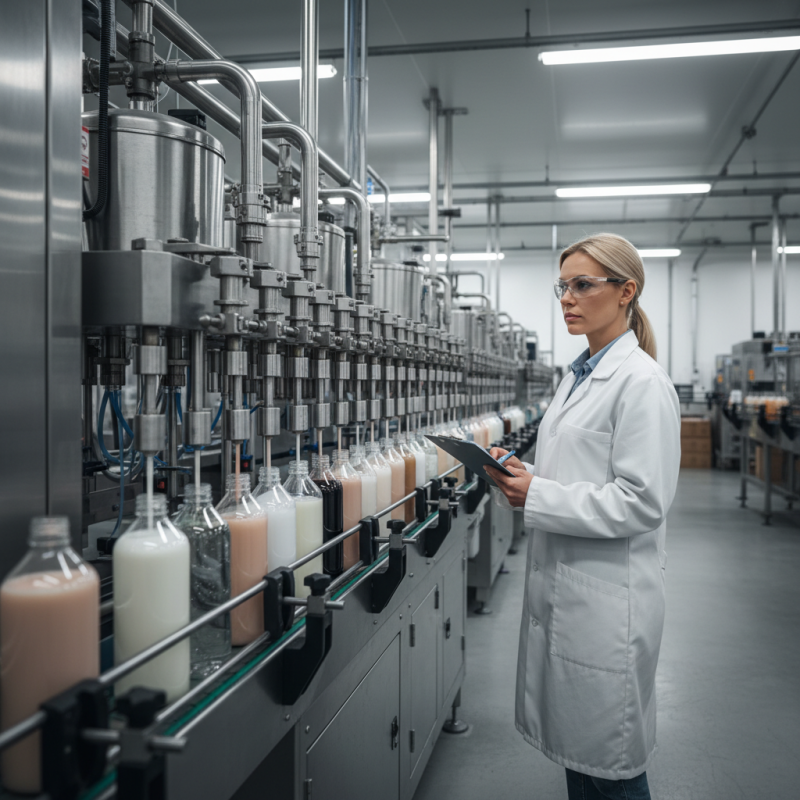
When considering how to choose the best liquid filling machine, understanding the different types available is crucial. Liquid filling machines can be categorized into several types, including gravity fillers, pressure fillers, and vacuum fillers. According to a recent market analysis, the global liquid filling machine market was valued at approximately $3.2 billion in 2022 and is projected to grow at a CAGR of 5.3% through 2030. This growth reflects the increasing demand for efficient packaging processes in various industries.
Gravity fillers are primarily used for thin liquids, such as water or juice. They rely on gravity to fill containers, which can sometimes result in inconsistent fill levels. Pressure fillers, on the other hand, can handle thicker liquids and provide more accurate fills. Vacuum fillers are effective for foamy or viscus liquids, reducing splash and waste. Understanding these types helps tailor your choice to product needs.
Tips: Assess your specific liquid's viscosity. Consult with industry experts on production demands. Consider speed and automation options that fit your budget. Reflect on past experiences to determine what features led to operational challenges. This will guide you in making a better decision. Explore how each type impacts your workflow efficiency and cost-effectiveness. Remember that each machine type carries its advantages and limitations, necessitating careful evaluation.
When selecting a liquid filling machine, understanding your product's viscosity is essential. Viscosity directly affects how the machine will operate. According to a 2022 report by the Food Processing Machinery Association, nearly 40% of production delays stem from using the wrong filling equipment for a product's viscosity. For example, a thick paste requires different machinery compared to a thin liquid.
Consider how your product behaves. Is it shear-sensitive? Will it foam or create bubbles during filling? These characteristics can complicate the filling process. A study from the Journal of Manufacturing Science reported that incorrect machine settings can lead to a 15% increase in filling errors for high-viscosity products. Testing your product's flow characteristics will provide valuable insights for choosing the right machine.
Also, consider temperature variations. Some products become thinner when heated, while others thicken. The right machine should accommodate these changes. The National Institute of Standards and Technology emphasizes that consistent filling accuracy is vital for maintaining product quality. Even slight variations can lead to significant cost implications. Finding the perfect fit requires thorough assessment and sometimes, trial and error.
When selecting a liquid filling machine, assessing production capacity and speed requirements is crucial. The pace at which your production line operates impacts overall efficiency. A machine's filling speed should align with your output goals. Consider how many bottles you need to fill per hour. This metric guides you in choosing the right machine.
Tips for evaluating production speed: Determine your peak production times. These periods might require faster machines. Analyze past production data to estimate future needs. Be realistic about growth. You may need to adjust your machine choice over time.
Next, think about the types of liquids you’ll be filling. More viscous liquids often require slower speeds. A balance between speed and quality is essential. Too fast a filling process could lead to spills or waste. Reflect on your production’s specific needs to make an informed decision. Investing time in this evaluation will pay off in efficiency.
When selecting a liquid filling machine, budget plays a crucial role. You need to assess the total cost of ownership. This includes not just the purchase price, but also maintenance, training, and potential upgrades. Skimping on initial costs can lead to expensive repairs later. Consider what fits within your financial plan without compromising quality.
Evaluate your production scale. If you're a small start-up, a basic machine might suffice. However, larger operations need robust machinery that can handle high volumes. Analyze the features you require. Automatic machines are often more costly, but they save time. Think about the return on investment. Will the machine boost efficiency enough to justify the cost?
Reflect on long-term needs as well. Equipment should adapt to your growing demands. Sometimes, choosing a slightly more expensive option offers better flexibility. Don’t forget to include hidden costs, like installation or shipping. A thorough calculation of these costs ensures you make an informed decision. It's easy to overlook details, so double-check your figures before committing.
When selecting a liquid filling machine, understanding your specific needs is crucial. Begin by assessing the type of liquid you will fill. Is it thin or viscous? This characteristic influences the design of the filling mechanism. Some machines excel with water-like liquids, while others handle thicker substances better. It’s important to prioritize compatibility over specifications.
Consider the machine's capacity and speed. If your production volume is high, a machine with faster filling rates is necessary. However, reflect on whether speed compromises accuracy. Some high-speed machines may struggle with precision. Customization features also play a vital role. Look for machines that offer adjustable filling volumes and nozzle types. This flexibility enables you to adapt to different products as your needs evolve.
Next, evaluate the material construction and hygiene features. You'll want a machine that is easy to clean and maintain. Stainless steel is often preferred for its durability and cleanliness. However, some traditional models might require more effort to keep sterile. This could lead to inefficiency and downtime. Always weigh these factors carefully to make the best decision.
: Determine how many bottles you need to fill per hour. Analyze your peak production times.
Consider the viscosity of liquids and balance speed with quality. Too fast can cause spills.
Analyzing past data helps estimate future needs. Be realistic about growth and production expectations.
Budget is crucial. Assess total ownership costs including maintenance and training, not just purchase price.
A basic machine may work for small operations. Larger ones need robust machines for higher volumes.
Analyze required features. Automatic machines may cost more but can save time and boost efficiency.
Consider future demands. Investing slightly more can offer better flexibility in the long run.
Yes, include installation and shipping costs. Hidden fees can affect your overall budget significantly.
Double-check your calculations and details. Overlooking aspects can lead to future regrets in your choice.
Rushing can lead to poor choices. Take time to reflect on your specific production needs and capacities.
When looking to understand how to choose the right liquid filling machine for production, it’s essential to explore the various types of machines available. Each type serves different purposes based on product characteristics, such as viscosity and other unique attributes. Assessing these characteristics will help you identify the most suitable machine for your specific product requirements.
Furthermore, evaluating your production capacity and speed needs is crucial, as it directly influences the type of machine you should select. Budget considerations are also vital; determining your cost constraints can narrow down your options. Finally, identifying any key features or customizations that align with your operational needs will ensure the liquid filling machine you choose is perfectly suited to enhance production efficiency and meet market demands.

Yongli Machine