7 Tips to Choose Liquid Filling Machines for Small Business

Time:2026-10-19 Author:Madeline
0%

Choosing the right liquid filling machine can shape daily productivity, product consistency, and customer trust. For a small business, every equipment decision matters because budgets, workspace, and labor are limited. A machine that looks affordable may create hidden costs through product waste, difficult cleaning, or frequent adjustments.

This guide explains How to choose liquid filling machines for small businesses through seven practical considerations. These include liquid viscosity, filling accuracy, container size, production volume, cleaning requirements, automation level, and after-sales support. A thin facial toner may require different equipment from thick honey or shampoo. Observe how the liquid flows, drips, and settles before selecting a filling method. Small details matter.

Start with real operating conditions, not only brochure specifications. Measure your containers, test sample products, and record the expected bottles per hour. Ask suppliers about contact materials, calibration procedures, spare parts, and operator training. Reliable manufacturers should provide clear technical data and realistic performance expectations. Independent reviews and demonstrations can also reveal limitations that sales descriptions may overlook.

No machine is perfect. A low-cost model may suit early production but become restrictive after growth. A highly automated system may reduce labor while increasing maintenance demands. Review your cleaning routine, available floor space, and future product plans honestly. The best choice is not always the fastest machine; it is the equipment your team can operate safely, maintain consistently, and justify financially.
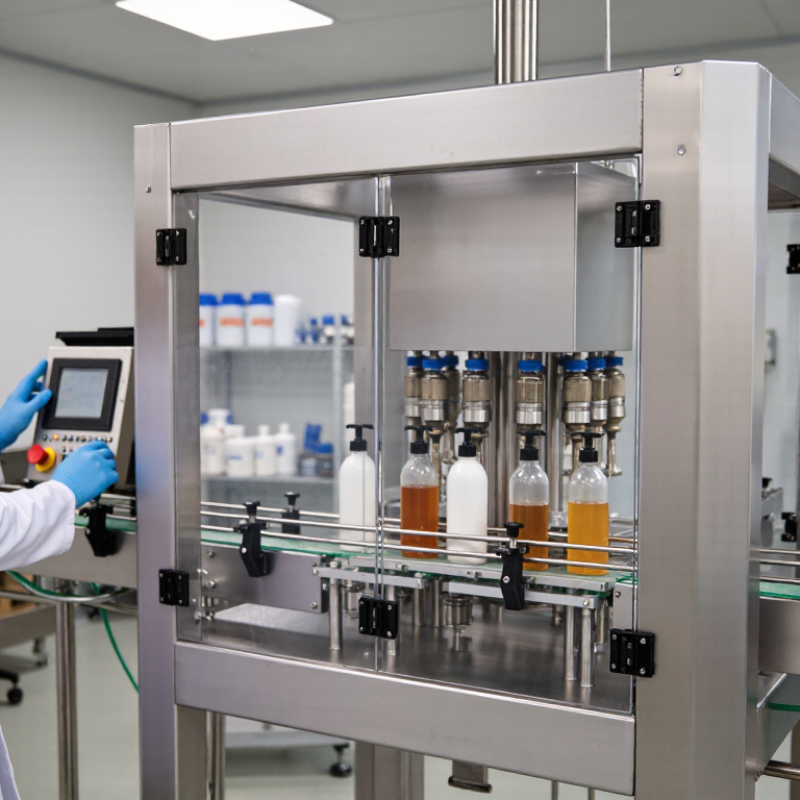
7 Tips to Choose Liquid Filling Machines for Small Business

Define Your Liquid Filling Needs and Production Goals

Before choosing a liquid filling machine, define the product and production goal clearly. Start with the liquid itself. Measure its viscosity, temperature, foaming behavior, and particle size. A thin liquid may flow quickly, while a thick lotion can leave residue inside the nozzle. Record these differences during real production trials, not only from a supplier’s specification sheet. Do not guess.

Next, describe your daily workload in numbers. How many bottles must be filled per hour? What container sizes will you use? A small workshop filling 300 bottles daily needs different equipment from one preparing 3,000 bottles. Check the required fill volume and acceptable tolerance. Even a small error can create waste across hundreds of containers. Leave room for seasonal growth, but avoid paying for capacity that will remain unused.

Practical testing often reveals overlooked details. Place sample bottles under the nozzle and observe dripping, splashing, and changeover time. Ask whether one operator can clean and adjust the machine safely. Confirm that product-contact parts suit the liquid and applicable safety requirements. Calibration should be simple and documented. I have seen businesses focus on speed, then struggle with cleaning and inconsistent fills. That is a costly lesson. Your first plan may be imperfect, so review trial results before making the final purchase.

Match Machine Types to Your Product’s Properties

7 Tips to Choose Liquid Filling Machines for Small Business

Match the machine to the liquid, not the container. PMMI’s 2024 State of the Industry report identifies flexibility and labor efficiency as continuing packaging priorities. Start with viscosity, particle size, foaming, temperature, and daily volume. Thin water-like products often suit overflow or gravity filling. Thick sauces may need piston or servo-pump systems. Particles require wider product paths. Small valves can clog quickly.

Foam changes the decision. A bottom-up filler can reduce turbulence for beer-like or surfactant-based liquids. For sticky products, diving nozzles and controlled filling speeds can reduce stringing. Check accuracy at the slowest and fastest settings. The U.S. National Institute of Standards and Technology emphasizes traceable measurement for reliable production; filling checks should use calibrated scales, not visual guesses. Cleanability matters too. FDA’s 2022 Food Code stresses equipment surfaces that are smooth, accessible, and cleanable. Ask for tool-free product-contact removal. It saves time.

Energy deserves attention. The U.S. Department of Energy reports that compressed-air systems can waste 20–30% of their input energy through leaks and inefficiency. Pneumatic equipment may look simple, but operating costs can surprise a small business. Compare electric and pneumatic designs using your actual cycle rate. Also test real product samples. I once underestimated a mildly foaming lotion; the laboratory result looked fine, but the production nozzle splashed badly. Specification sheets cannot replace a practical trial.

7 Tips to Choose Liquid Filling Machines for Small Business - Match Machine Types to Your Product’s Properties

Tip Product Property Recommended Machine Type Typical Filling Range Typical Accuracy* Why It Fits Key Considerations
1 Low-viscosity, free-flowing liquids Overflow filler Approximately 50 mL to 5 L per container Typically within ±1% to ±2% Creates a consistent fill level, making it suitable for transparent bottles and products such as water, vinegar, and liquid cleaners. The product should flow easily and should not contain large particles or excessive foam.
2 Thin to medium-viscosity liquids Time-pressure filler Approximately 10 mL to 20 L per container Typically within ±1% to ±3% Uses controlled pressure and filling time, offering a relatively simple and cost-effective setup for small production runs. Filling consistency can be affected by temperature, pressure stability, and changes in product viscosity.
3 Medium- to high-viscosity products Piston filler Approximately 10 mL to 5 L per container Typically within ±0.5% to ±1% Provides positive displacement and repeatable dosing for products such as sauces, creams, gels, and thick detergents. Select piston size, valve design, and nozzle diameter according to viscosity and required fill volume.
4 Very thick, shear-sensitive, or particulate products Progressive cavity pump filler Approximately 50 mL to 10 L per container Typically within ±0.5% to ±2% Provides gentle, continuous product transfer and can handle some particulates while reducing turbulence and foaming. Pump selection must account for particle size, solids concentration, cleaning requirements, and product sensitivity.
5 Foaming or aeration-prone liquids Diving-nozzle or bottom-up filler Approximately 50 mL to 5 L per container Typically within ±1% to ±2% The nozzle can fill from the bottom upward, helping reduce splashing and visible foam in products such as shampoos and liquid soaps. Nozzle movement, filling speed, and product temperature should be adjusted to control foam formation.
6 Products requiring hygienic or frequent changeover Sanitary peristaltic filler Approximately 1 mL to 2 L per container Typically within ±0.5% to ±2% The product contacts only the tubing, which can simplify cleaning and reduce cross-contamination risk between batches. Tubing must be compatible with the product and replaced according to wear, pressure, and sanitation requirements.
7 Multiple products, container sizes, or growing demand Servo-driven volumetric filler Approximately 10 mL to 10 L per container Typically within ±0.5% to ±1% Offers programmable fill volumes, repeatable motion, and easier adjustment when a small business expands its product range. The higher purchase cost should be justified by production volume, changeover frequency, and the need for recipe storage.
Selection note: The operating ranges and accuracy figures shown are typical planning values, not performance guarantees. Actual results depend on product temperature, viscosity, surface tension, container shape, nozzle design, pump condition, and filling speed. Always confirm the specification through a product trial before purchasing.

Evaluate Filling Accuracy, Speed, and Container Compatibility

7 Tips to Choose Liquid Filling Machines for Small Business

Filling accuracy protects both margins and customer trust. Test the machine with your actual liquid, not only water. Viscous soap, thin oil, and flavored syrup behave differently. Check fill weights across at least 30 containers. Record the average, range, and occasional outliers. Small errors become expensive during long production runs. A digital scale helps, but calibration still matters. We once blamed the pump for uneven fills. The real issue was trapped air in the supply line.

Speed should match your workflow, not an impressive brochure number. Ask for the output rate under realistic conditions. Include container loading, cap changes, cleaning, and short pauses. A machine rated for 40 bottles per minute may produce less in practice. Faster operation can also increase splashing, foam, or dripping. Adjustable filling speed and a controlled pause can improve consistency. It may feel slower, but rejects often drop.

Container compatibility needs hands-on checking. Measure the neck opening, height, diameter, and base stability. Test glass, plastic, and lightweight containers separately. A narrow neck may need a smaller nozzle. A flexible bottle may require gentle handling and support. Check whether the machine accommodates different sizes without lengthy changeovers. Operators should adjust settings safely and record them clearly. We overlooked bottle shape once. That mistake caused unstable positioning and repeated delays. Leave room for future container changes. Small businesses often change packaging sooner than expected.

Check Cleaning, Maintenance, and Operator Safety Features

Tip 1: Choose a machine with smooth, accessible surfaces. Fewer hidden corners mean less residue after each production run.

Tip 2: Check whether product-contact parts can be removed without special tools. Operators should not struggle beside a sink.

Tip 3: Look for clear cleaning instructions, including recommended temperatures, detergents, and inspection points.

Tip 4: Examine the maintenance design before buying. A practical machine should provide easy access to seals, valves, hoses, and sensors. Ask how often these parts require inspection.

Tip 5: Keep spare wear parts available, especially gaskets and filling nozzles. A small missing seal can stop a busy workday. Maintenance records also help identify repeated problems. Still, no checklist is perfect. A real operator may discover awkward access that specifications never mention.

Tip 6: Prioritize safety features such as emergency stops, guarded moving parts, and stable controls. The emergency button should be visible and reachable within seconds.

Tip 7: Select controls with simple settings and clear status signals. New operators make fewer mistakes when the interface is readable. Training should include cleaning lockout steps, spill response, and safe restart procedures. Test these routines with the actual team, not only the equipment supplier. A machine can look safe during a demonstration, yet feel confusing during a rushed cleanup.

Compare Costs, Customization Options, and Supplier Support

Choosing a liquid filling machine for a small business requires more than comparing the purchase price. Ask for the full cost, including pumps, nozzles, installation, training, maintenance, and spare parts. A cheaper machine may become expensive when a replacement valve takes three weeks to arrive. Calculate the cost per filled bottle across your expected production volume. Keep a small repair budget. You will probably need it.

Customization should match your product and workspace, not your imagination. Check whether the machine handles your liquid’s thickness, temperature, and container shape. A narrow nozzle may reduce dripping, while a wider nozzle can speed up thicker products. Request a trial using your actual bottles and formula. Measure fill accuracy over at least 50 containers. Small errors become costly during a long production run.

Supplier support often separates a useful machine from a frustrating purchase. Ask how quickly technicians respond, whether remote troubleshooting is available, and which parts remain in stock. Clear manuals and practical training reduce operator mistakes. Confirm warranty terms in writing, including travel and labor coverage. Speak with similar small businesses if possible. Their experience may reveal delays that sales materials overlook. I once focused too heavily on customization and ignored cleaning time; that decision slowed every shift. Review sanitation access, changeover steps, electrical requirements, and future capacity before signing. A machine should fit today’s budget without blocking tomorrow’s growth.

FAQS

How should I define my liquid filling requirements?

Measure viscosity, temperature, foaming behavior, and particle size during real production trials. Do not rely only on specification sheets. Record how the liquid flows, drips, splashes, or leaves residue.

How much production capacity does a small business need?

Calculate bottles per hour, container sizes, fill volumes, and acceptable tolerance. A workshop filling 300 bottles daily needs different capacity from one filling 3,000. Allow modest growth, but avoid unused capacity.

Which filling system suits thin or thick liquids?

Thin, water-like liquids often suit gravity or overflow systems. Thick lotions and sauces may need piston or servo-pump systems. Test both slow and fast settings. The first choice may be wrong.

How should foaming and sticky liquids be handled?

Bottom-up filling can reduce turbulence and foam. Diving nozzles and slower filling can reduce stringing from sticky products. Place sample bottles beneath the nozzle. Watch the actual liquid behavior.

What should I check for liquids containing particles?

Confirm the particle size and choose wider product paths. Narrow valves can clog quickly. Test the largest particles during continuous operation. A short trial can hide a serious blockage risk.

How can I verify filling accuracy?

Use calibrated scales and documented checks. Compare actual fill weights across different speeds and container sizes. Visual inspection is not enough. Small errors multiply into significant product waste.

What cleaning and maintenance features matter most?

Choose smooth, accessible surfaces with few hidden corners. Product-contact parts should come off without special tools. Check access to seals, valves, hoses, and sensors. Keep spare gaskets and nozzles available.

Which operator safety features should a machine include?

Look for visible emergency stops, guarded moving parts, stable controls, and clear status signals. Train operators on cleaning lockout, spill response, and safe restart procedures. Test these routines with the real team. A demonstration can feel easier than daily work.

Conclusion

Choosing the right equipment begins with understanding your product, container sizes, target output, and future production goals. This guide to How to choose liquid filling machines for small businesses explains how to match machine types with liquid properties such as viscosity, foam tendency, temperature sensitivity, and particle content. It also highlights the importance of selecting equipment that can handle your preferred containers while maintaining consistent filling accuracy and an appropriate production speed.

Before making a purchase, small businesses should review cleaning procedures, maintenance requirements, changeover time, and operator safety features. A machine that is simple to access and maintain can reduce downtime and support reliable daily operations. Finally, compare the total cost of ownership, available customization options, warranty coverage, training, spare parts, and supplier support. By balancing performance, flexibility, safety, and long-term value, businesses can choose a filling solution that meets current needs while allowing room for future growth.

Madeline

Madeline

Madeline is a dedicated marketing professional with a wealth of expertise in our company's core offerings. With a keen understanding of the industry, she brings a unique perspective to her role, consistently delivering high-quality content that highlights the superior aspects of our products. As......